
Picky eater books and a no-pressure plan for toddlers
Ten picture books about trying new foods, plus what helps a picky toddler: tiny repeated tastes, no pressure, one safe food, and when to call the doctor.
In this post
Picky eating in toddlers is common, usually temporary, and rarely your fault. What helps is unexciting and it works slowly: offer small amounts of new foods again and again without pressure, always include one food your child already eats, eat together, and let them decide how much to eat. Most toddlers need somewhere between 8 and 15 tries before a new food is accepted (Children’s Hospital of Philadelphia).
Picture books help in a quieter way. A toddler can watch a character sniff, poke and finally taste something new with nothing at stake, then do the same at dinner. Below is the plan, what to say at the table, ten picky eater books sorted by age, and when picky eating is worth a call to the pediatrician.
Why toddlers get picky
Refusing new foods is a normal stage of development. In a large UK study of children followed from birth, the share of picky eaters rose through the toddler years and peaked around age 3 (about 15% at 38 months), then eased off (Taylor and Emmett). The review of that research notes that picky eating generally resolves with little or no intervention.
Children’s Hospital of Philadelphia makes the same point from the clinic side: most picky eating can’t be explained by poor parenting, and many picky eaters have brothers and sisters who eat just fine. Some kids seem to come into the world more cautious about new foods (CHOP).
That takes the pressure off tonight’s dinner. Over months, you’re building a table where new foods show up often and nobody fights about them.
The no-pressure plan
You choose the food; they choose how much
The idea is often called the division of responsibility, from dietitian Ellyn Satter. The adult decides what food is offered, when and where. The child decides whether to eat it and how much (Ellyn Satter Institute). The AAP’s version is short: it’s a parent’s responsibility to provide food, and the child’s decision to eat it (HealthyChildren.org).
In practice, that means you don’t cook a second dinner when the first one is refused, and you don’t count bites either.
Offer new foods small and often
CHOP’s Picky Eaters Clinic says it takes 8 to 15 exposures before a child accepts a new food, and that parents typically give up after 3 to 5 (CHOP). The AAP gives a similar range and adds that some foods take 15 to 20 tries (HealthyChildren.org, HealthyChildren.org).
So put one or two pieces of the new food on the plate, not a heap, and do it again next week. Serve it a different way sometimes: roasted, raw, in a sauce, cut into sticks.
Always include one safe food
The AAP suggests including at least one food your child likes at every meal (HealthyChildren.org). Bread, rice, a fruit they love. Knowing there’s something safe on the plate lowers the stakes of everything else.
Come to the table hungry
CHOP recommends about two hours between snacks and meals, and an hour between drinks (including milk) and meals (CHOP). A toddler who has been grazing all afternoon has little reason to try anything.
Skip bribes and dessert deals
“Two more bites and you get a cookie” teaches that the vegetable is the price and the cookie is the prize. The AAP says bribing with treats can make the prize food even more exciting (HealthyChildren.org), and the research review above suggests non-food rewards if you want to celebrate trying (Taylor and Emmett).
Eat it yourself, together
Toddlers copy. The AAP recommends family meals, without screens, where you eat the foods you’d like them to try (HealthyChildren.org). In the UK study, parents’ healthy eating when a child was 1 predicted how many vegetables the child ate at 2 (Taylor and Emmett).
Let them help
Choosing a vegetable at the store, rinsing berries, tearing lettuce, stirring. The AAP suggests involving kids in picking and preparing food (HealthyChildren.org), and toddlers are far more curious about something they washed themselves.
Count the small steps
Looking at a new food, touching it, smelling it, licking it and spitting it into a napkin all count as progress. Say so out loud. Your toddler may need to do the earlier steps a few times before putting anything in their mouth.
What to say at the table
And a few to retire: “Just one bite,” “Clean your plate,” “No dessert until you eat your peas,” and “You liked this yesterday.” Each one turns dinner into a negotiation, which is the pressure the research says to avoid.
Picky eater books for toddlers
In these picture books, food is the fun part and nobody gets a lecture. Read them at any time of day, not only at meals.
For 1- to 3-year-olds
- Lunch by Denise Fleming. A very hungry mouse eats his way through a big, colorful lunch. Great for naming foods and colors together.
- Rah, Rah, Radishes! A Vegetable Chant by April Pulley Sayre. A bouncy rhyming chant about vegetables that’s fun to say out loud.
- Eating the Alphabet by Lois Ehlert. An alphabet tour of fruits and vegetables, from apricot and artichoke to yam and zucchini. Good for pointing and naming, and for picking something to find at the store.
- Daniel Tries a New Food by Becky Friedman. Mom Tiger makes two new foods for a dinner guest, Daniel isn’t sure, and he learns to try because it might taste good. Daniel Tiger fans may recognize the line.
For 3- to 5-year-olds
- Little Pea by Amy Krouse Rosenthal, illustrated by Jen Corace. Little Pea hates eating candy for dinner, but he has to finish it before he gets his spinach for dessert. The flip makes kids laugh, which takes the edge off.
- I Will Not Ever Never Eat a Tomato by Lauren Child. Big brother Charlie gets fussy Lola to try foods by giving them wonderful made-up names. Parents tend to borrow the trick.
- Bread and Jam for Frances by Russell Hoban. Frances only wants bread and jam, until she gets it for the sixth meal in two days. A gentle classic about how “only this” gets boring.
- Green Eggs and Ham by Dr. Seuss. Sam-I-Am will not stop asking, and the ending is a happy surprise. Kids love it, but read the pestering as part of the joke, not as a technique.
For 4 and up
- Gregory, the Terrible Eater by Mitchell Sharmat. Gregory is a goat who refuses shoes and tin cans and wants fruit, vegetables and eggs instead. The role reversal is the fun.
- The Seven Silly Eaters by Mary Ann Hoberman. Each of seven children wants one special dish, their mother wears herself out cooking them all, and the kids come up with a surprise. Rhyming and funny, and quietly sympathetic to the cook.
A story to rehearse trying something new
The books above star other kids. A story starring your own child can rehearse the exact step you’re working on. Here’s a short example with two made-up kids, Pip (3) and Wren (2), and a new food.
An example story
Wren’s Tiny Taste
Sunlit Gouache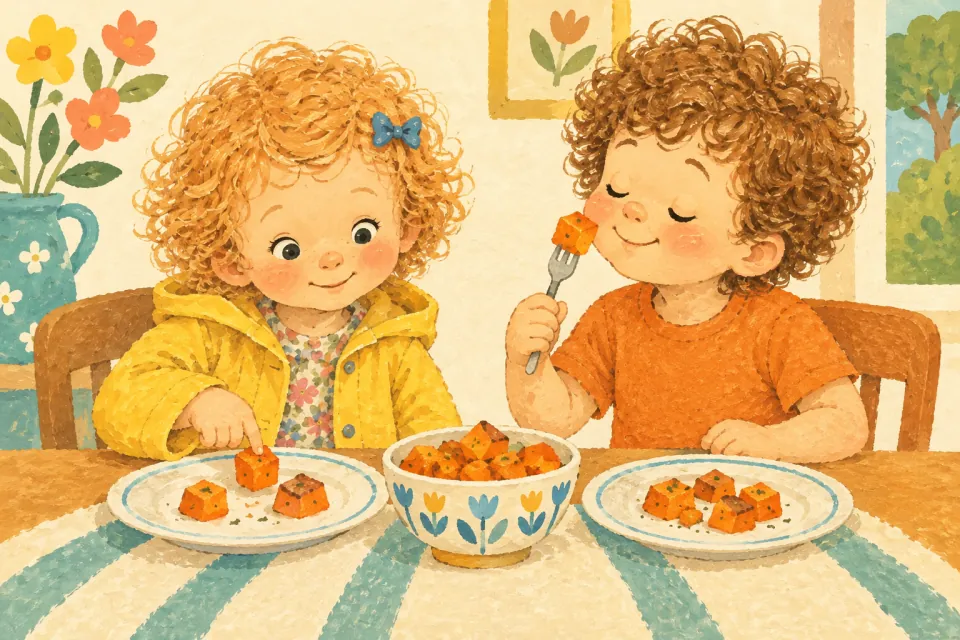
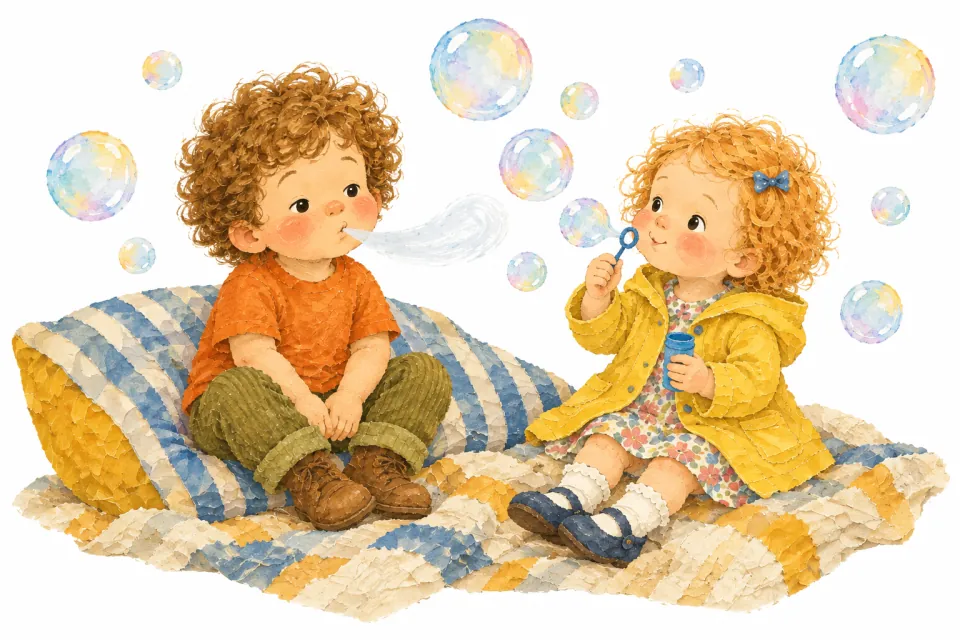
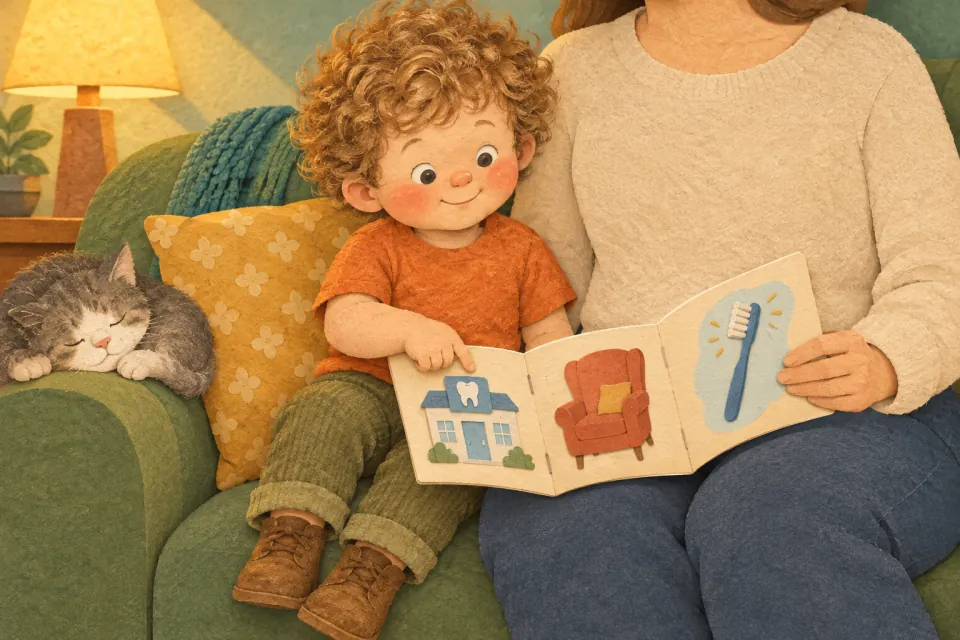
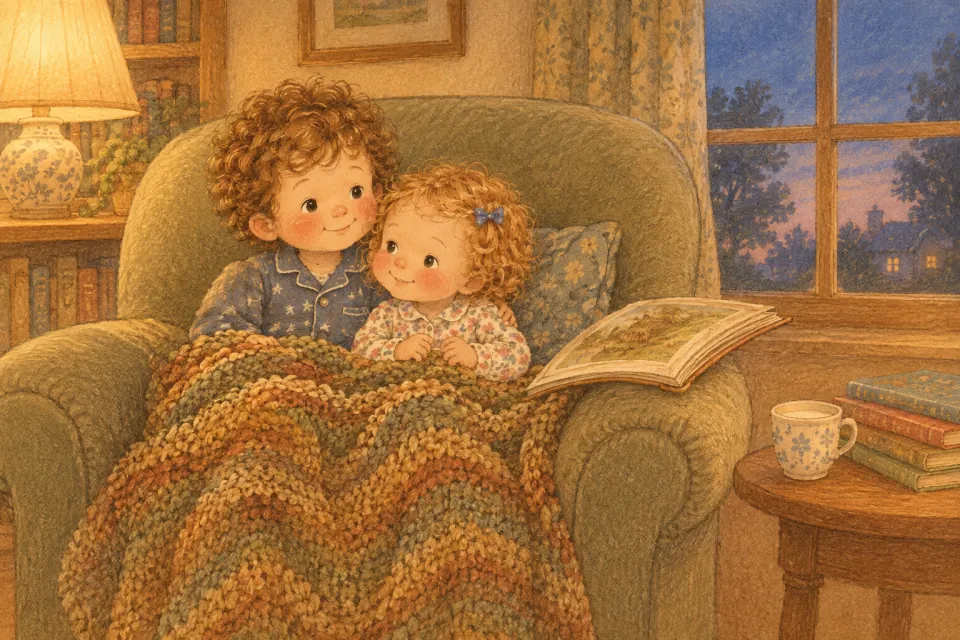
Something new was on Wren’s plate. Orange. Soft. Warm. “That’s sweet potato,” said Papa. Wren looked. Pip sniffed. Sniff, sniff! “It smells like cake,” said Pip. Wren poked it with one finger. Squish! She licked her finger. A tiny taste. “Hmm,” said Wren. “I tried it!” Look, sniff, poke, tiny taste. Papa smiled. “You tried something new.” And that was the whole job.
Nobody in the story has to like the food. The win is the tiny taste, and the repeatable line (“look, sniff, poke, tiny taste”) gives a toddler a script to follow at the real table. Once Upon Us can weave a trying-new-foods lesson into a picture book built from your family’s own day (see how lessons work), and a hand-drawn version works too: draw the food, write the steps, and let your child be the hero. For more on building a story around one real situation, see our guide to writing a social story.
If dinner battles are spilling over into meltdowns, our guide to toddler big feelings has scripts for the moment itself.
When to talk to your pediatrician
Most picky eating is a phase. It’s worth a call to your child’s doctor if you notice:
- Your child isn’t gaining weight, is losing weight, or their doctor has mentioned their growth.
- Frequent choking, gagging, coughing or spitting food out while eating, or holding food in their cheeks.
- A very short list of accepted foods that keeps getting shorter, or foods they used to eat being dropped.
- Extreme distress around meals or at the sight of certain foods.
- A sudden, large drop in eating or drinking, for example after a choking scare.
This list draws on Nationwide Children’s Hospital and CHOP.
These are among the signs pediatric feeding specialists list for a feeding disorder, which is different from ordinary pickiness and is treatable. And if you’re simply worried whether your child is getting enough nutrients, the AAP’s advice is to ask (HealthyChildren.org). Your pediatrician can check their growth and help you troubleshoot.
Questions parents ask
How many times should I offer a new food before giving up?
More than feels reasonable. Children’s Hospital of Philadelphia says it takes 8 to 15 tries before a child accepts a new food, and notes that parents often stop after 3 to 5. The American Academy of Pediatrics puts it at 10 or more, and sometimes 15 to 20.
Should I make my toddler take one bite?
It usually backfires. The AAP warns that pressuring kids to eat, or punishing them when they don’t, can make them dislike foods they might otherwise like. Put the food on the plate, eat it yourself, and let looking, touching or a lick count.
Is picky eating normal for 2- and 3-year-olds?
Very. In one large UK study, picky eating was most common around age 3 and generally resolved without any intervention. Many picky eaters have siblings who eat everything, so it’s rarely about parenting.
When is picky eating something to see a doctor about?
Talk to your pediatrician if your child isn’t gaining weight or is losing it, often chokes, gags or coughs while eating, eats a very short list of foods that keeps getting shorter, or gets extremely upset at meals.
Sources
- 10 Tips for Parents of Picky Eaters, HealthyChildren.org (American Academy of Pediatrics)
- How do I help my picky eater try more healthy foods?, HealthyChildren.org (American Academy of Pediatrics)
- Feeding a Picky Eater: The Do’s and Don’ts, Children’s Hospital of Philadelphia
- Picky eating in children: causes and consequences, Taylor and Emmett, Proceedings of the Nutrition Society
- The Satter Division of Responsibility in Feeding, Ellyn Satter Institute
- Pediatric Feeding Disorder: Symptoms, Diagnosis and Treatment, Nationwide Children’s Hospital
- Book details checked against Open Library catalog records